
State-certified Engineering Office
AAC is an established engineering office specializing in the investigation of surfaces, coatings, and materials, as well as material development projects.

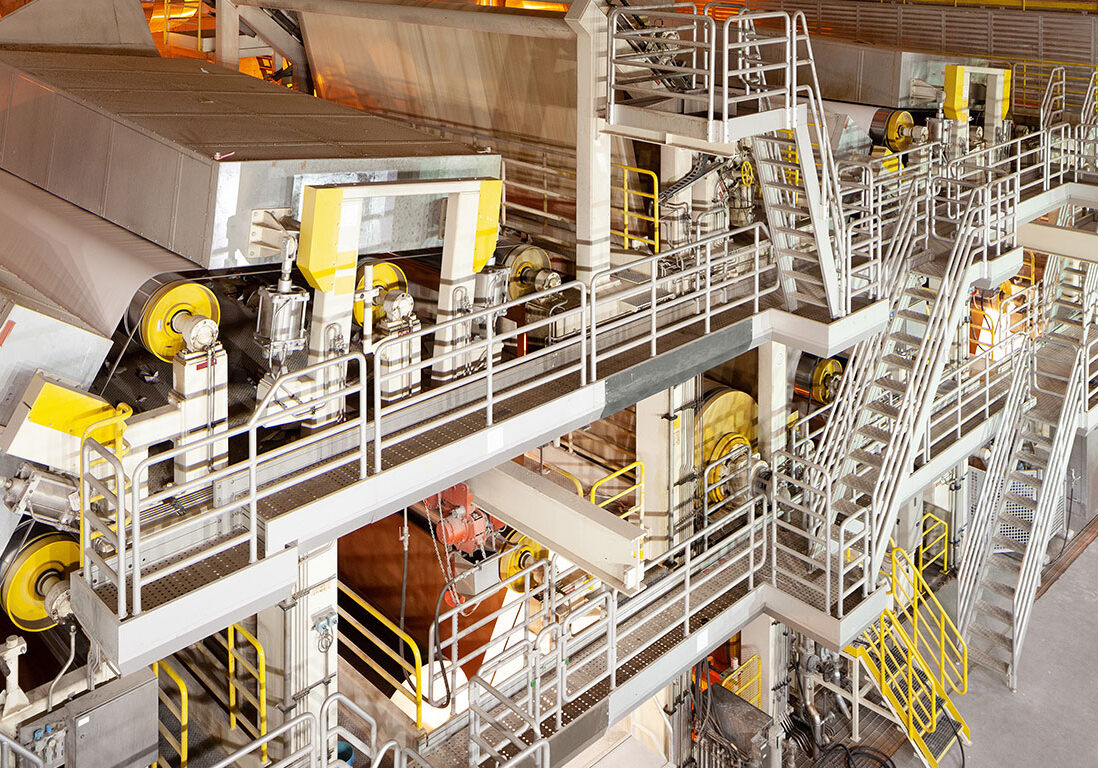
With state-of-the-art equipment, AAC conducts investigations as a service for industrial companies, including surface characterizations, tribological studies, mechanical testing, and failure analysis. These services are crucial in understanding the performance, durability, and integrity of materials in various applications, ensuring that industrial components meet stringent quality and safety standards.
State-certified Engineering Office
Engineering office for failure analysis & material development
As an official test house for ESA, AAC carries out projects in the space sector. The highly qualified team possesses the theoretical background and extensive experience as an engineering and testing service provider to solve problems with modern analytical methods and successfully implement complex material development projects. AAC’s expertise in material analysis enables it to dissect and understand the microscopic and macroscopic properties of materials, facilitating the development of advanced materials that perform reliably under extreme conditions.
Material analysis at AAC involves a comprehensive suite of techniques designed to evaluate the chemical composition, microstructure, mechanical properties, and performance characteristics of materials. This includes techniques such as scanning electron microscopy (SEM), energy-dispersive X-ray spectroscopy (EDX), X-ray diffraction (XRD), and various forms of spectroscopy and thermal analysis. These methods allow AAC to provide detailed insights into material properties, guiding the optimization and development of new materials.
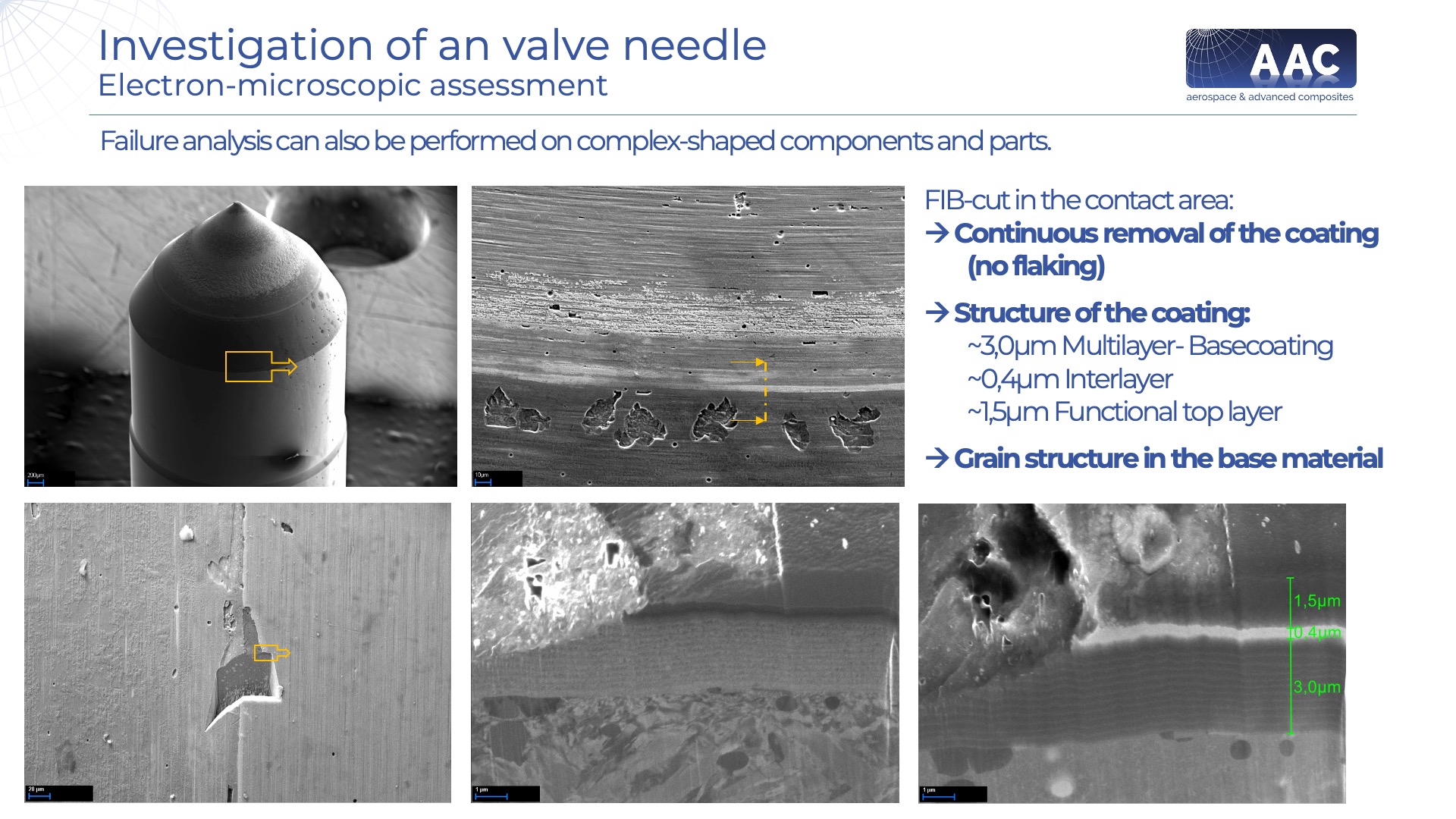
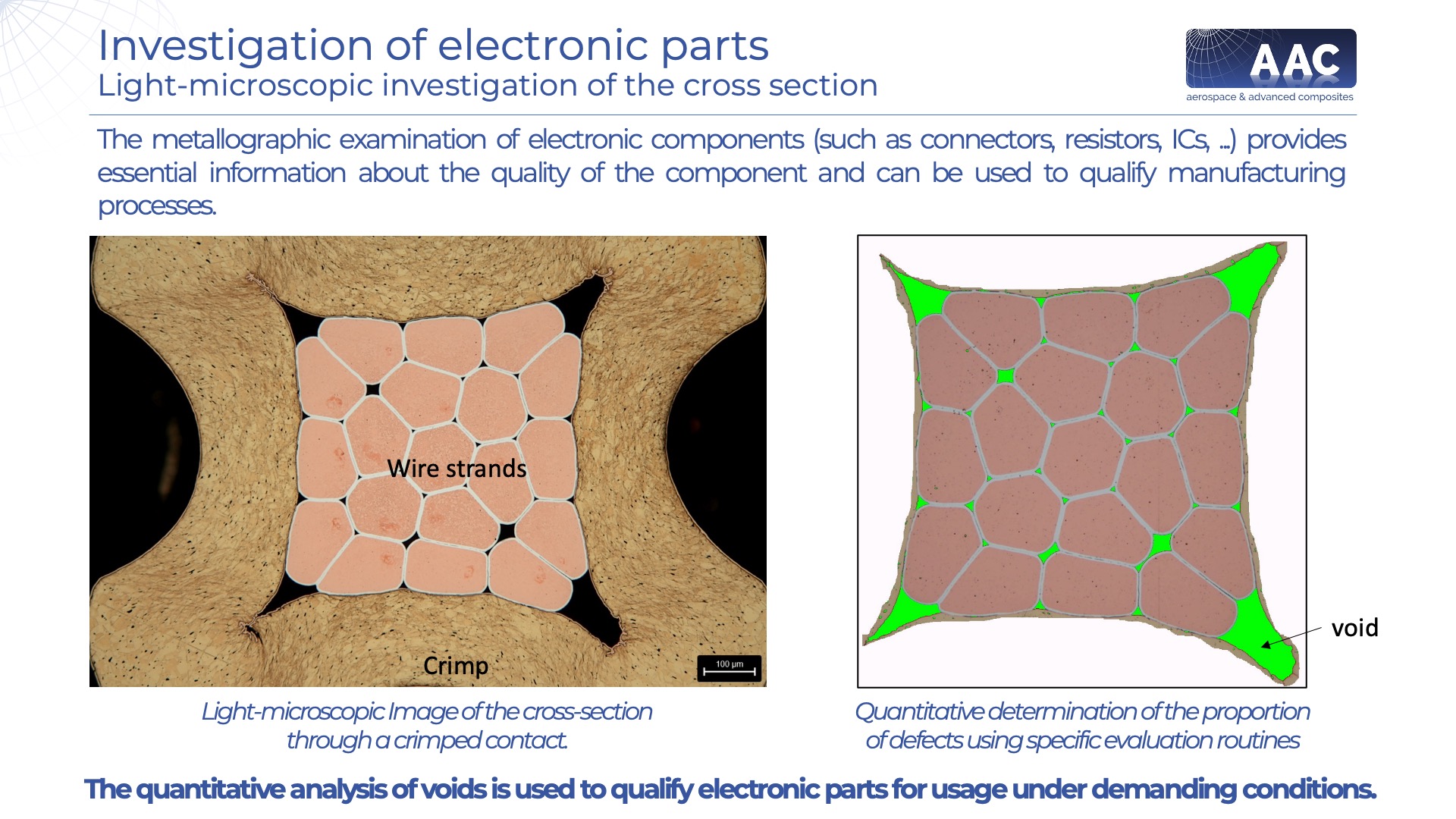
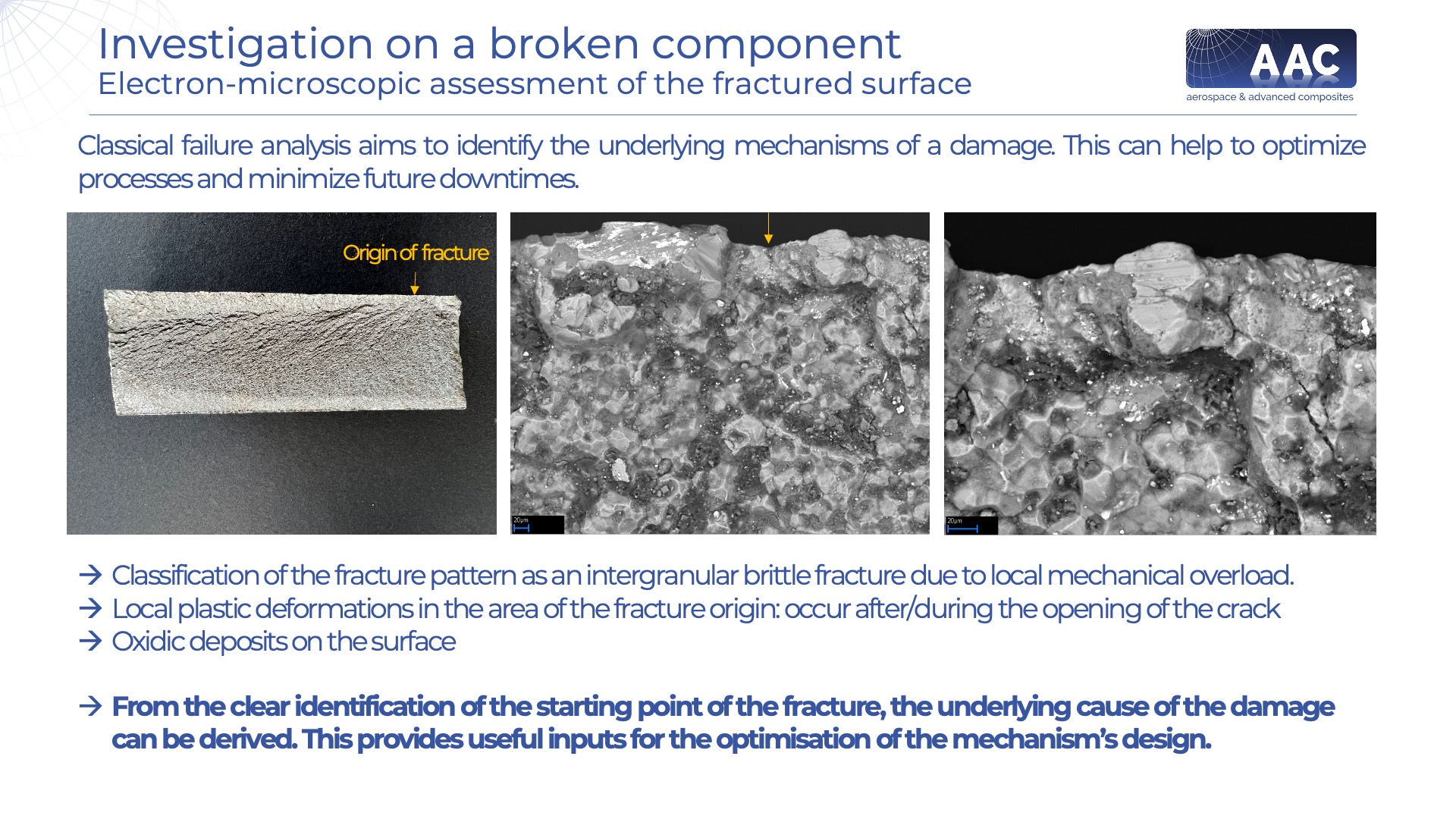
Failure analysis is another critical service offered by AAC, aimed at identifying the root causes of material and component failures. This process involves a systematic investigation that combines visual inspection, non-destructive testing, fractography, metallography, and mechanical testing. By understanding the failure mechanisms, AAC helps clients implement corrective actions to prevent future failures, improve product designs, and enhance overall reliability. The failure analysis process not only identifies immediate issues but also contributes to long-term improvements in material performance and safety.

Dr. Christoph Auner is a distinguished professional in the field of aerospace and materials technology.
He currently serves as the CEO of Aerospace & Advanced Composites GmbH (AAC), a renowned company specializing in material testing and development for both aerospace and terrestrial applications.
DI Dr. Christoph Auner
Managing Director
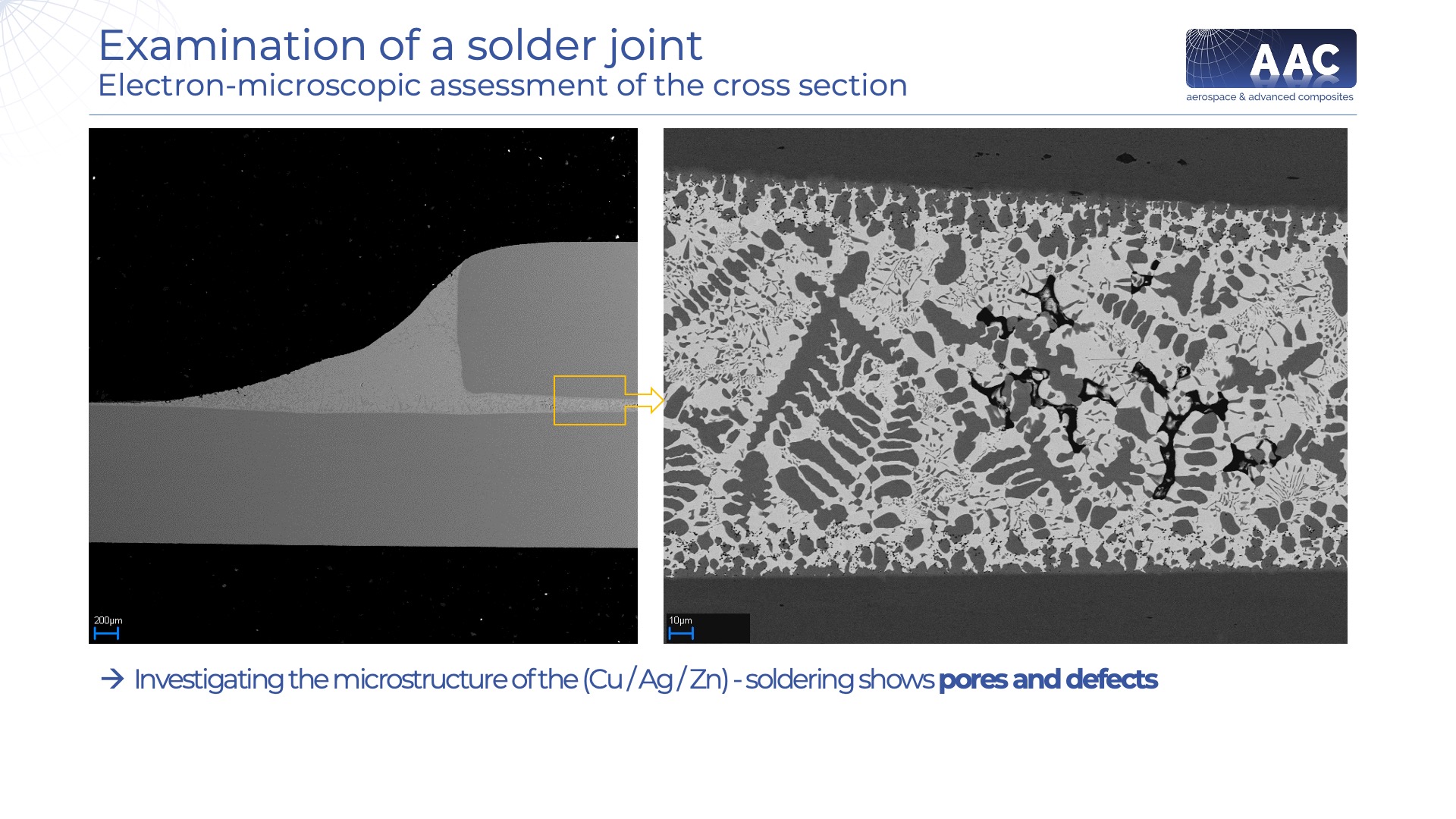
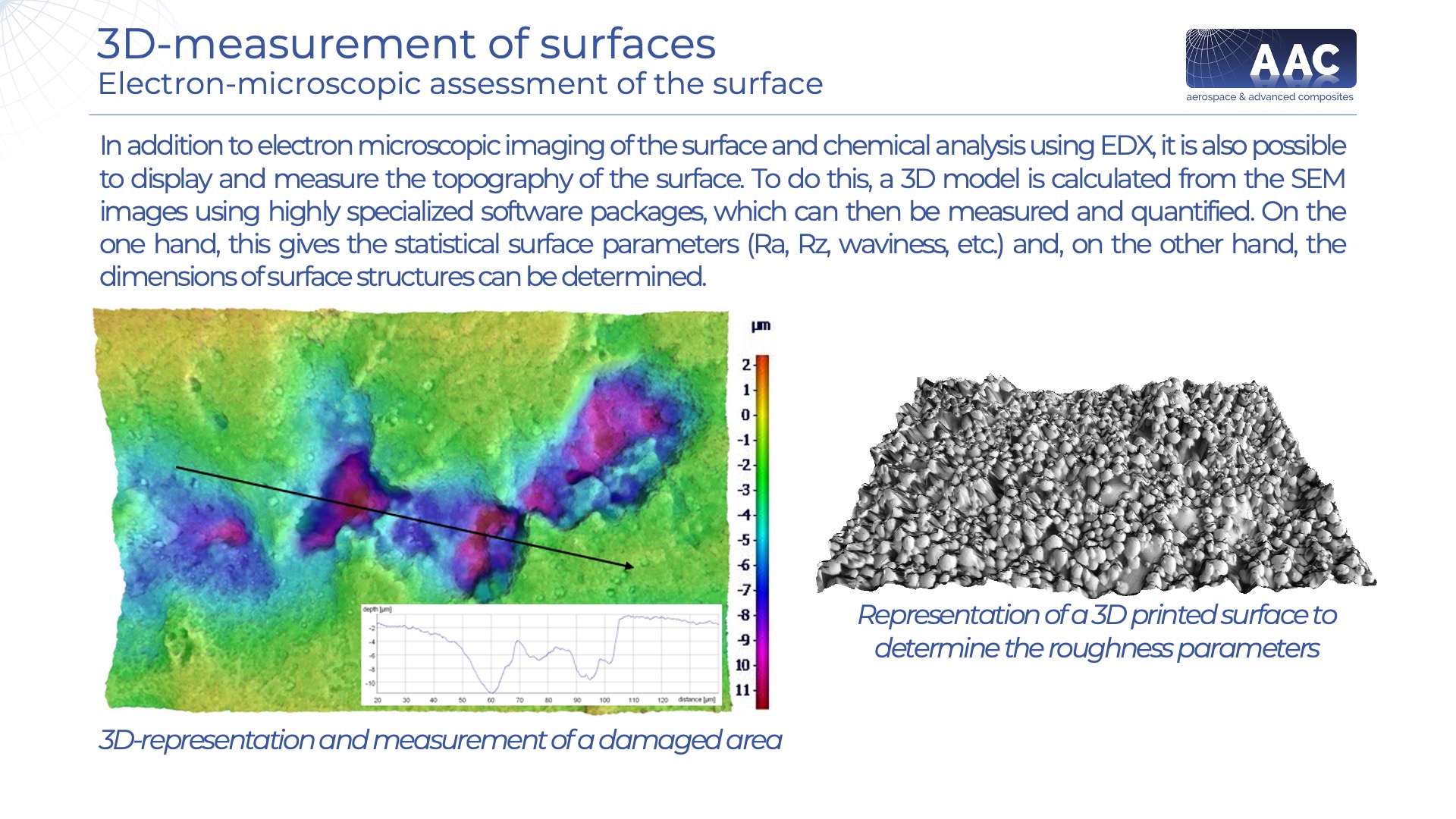
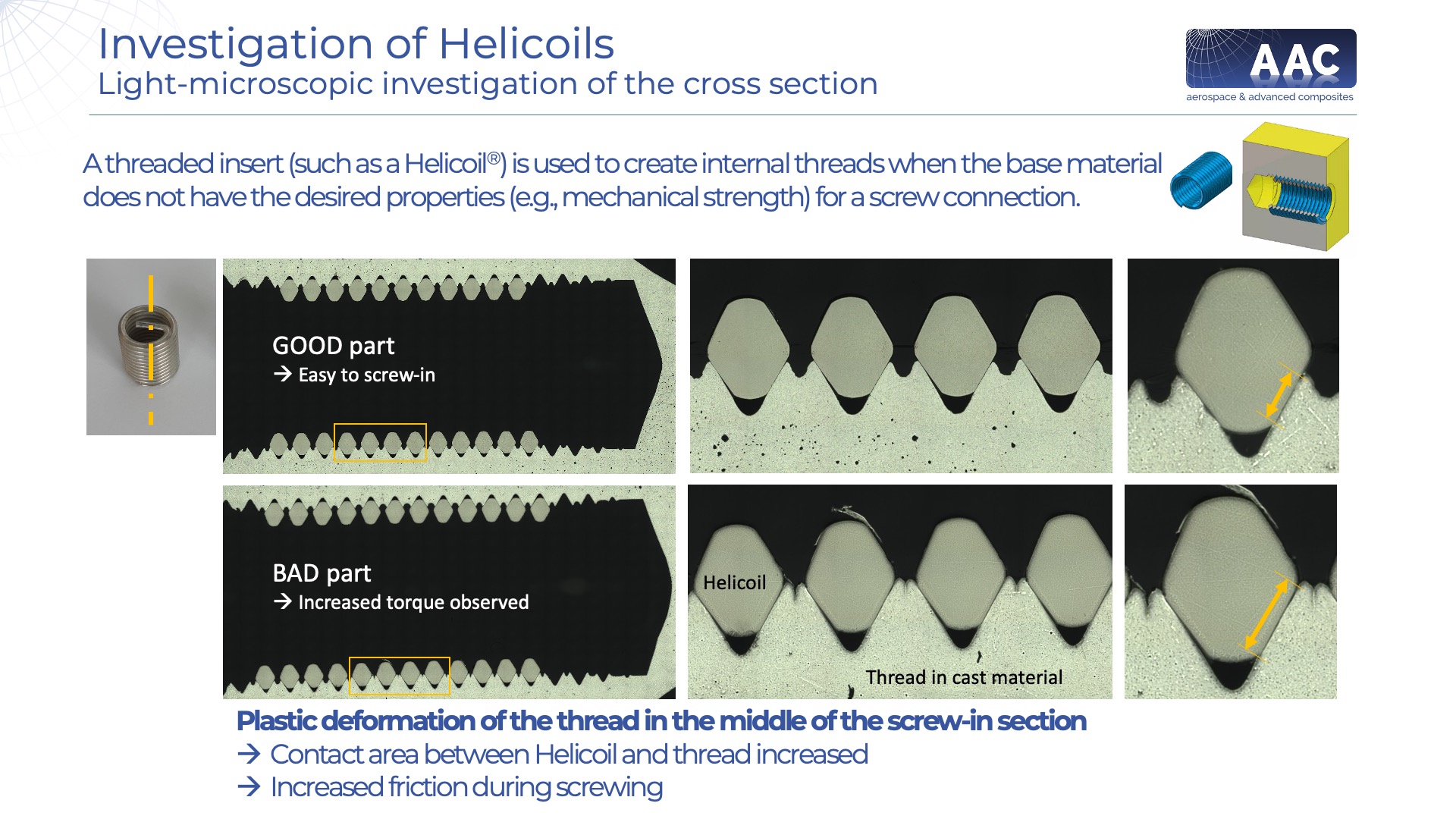
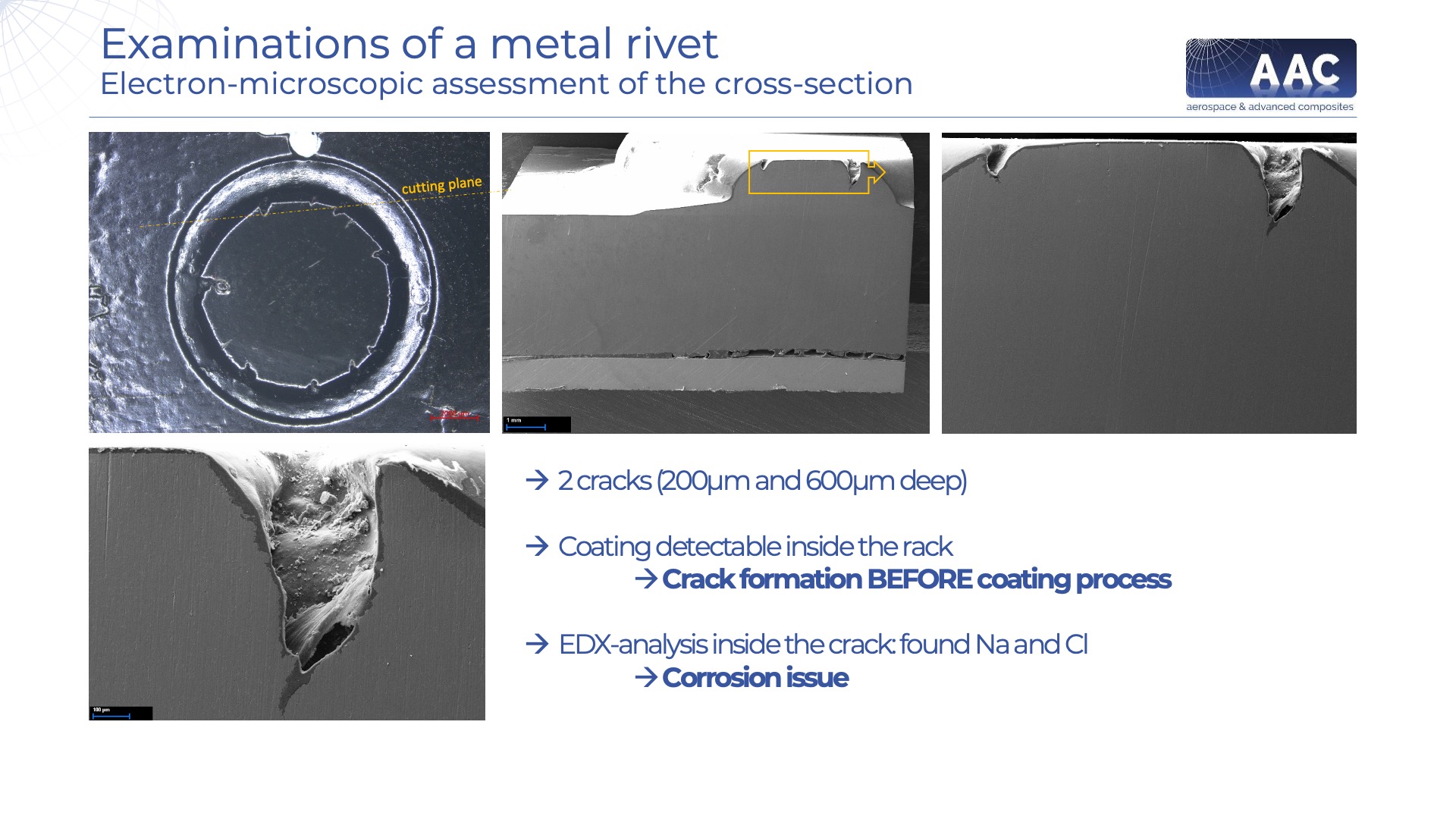
Examples of Our Failure Analyses in Images



Products and Services
As an engineering office, AAC offers services in the fields of material and surface analysis, testing, and characterization.
AAC also offers research and development services for customer-oriented solutions, particularly for additive manufacturing technologies, functional coatings, and composite materials.
In addition, AAC provides specialized coating products with easy-to-clean and non-stick properties (AAC 2000 EC, AAC 3001 AN) for specific industrial applications.
Our services encompass numerous procedures such as
- Metallography
- Failure analysis
- Scanning electron microscopy (SEM)
- Surface characterization
- Friction coefficient measurement
- Adhesion testing
- Hardness testing
- Coating thickness measurement
- Nanoindentation
- Mechanical testing
- Chemical analysis
- Density determination
- Thermal analysis
- Dynamic light scattering (DLS)
- Coating characterization
- Weathering tests
- And much more