Projects

Projects - for Aircraft and Wind Energy

AAC Research is actively engaged in numerous national and international research and development initiatives

collaborating with esteemed organizations such as the Austrian Research Promotion Agency (FFG), the European Space Agency (ESA), the European Union (EU), and the European Defence Fund (EDF). Through these collaborations, AAC contributes to advancing technologies in aerospace, defense, as well as terrestrial sectors, reinforcing Austria’s and Europe’s strategic autonomy and innovation capacity.

// projects
    MAC – “Molecular Absorption Coating”

    2025

    MAC

    Duration: May 2025 – Oct 2026

    Funding Source: ESA

    Collaborating Partners: Gusland Consulting, Materiales, OHB

    Actual instruments on satellites are very sensitive to contamination. This activity aims to develop a molecular absorption coating that can be applied close to senstive surfaces – e.g. optical instruments – to keep contamination at low level.

    A3Lub2 – Austrian Dry Lubrication for Deployment Applications
    2025

    A3Lub2

    Duration: Feb 2018 – Oct 2025

    Funding Source: ESA

    Collaborating Partners: BGC (CH), Ensinger Simtimid (AT), HDSE (DE), LSS (DE)

    Following the development during SLPMC2, this project “A3Lub2” AAC performed successfully the validation of the new material TS8591 by ENSINGER Sintimid (AT). Following that, all critical bearings necessary for a Large Deployable Reflector (LDR) were manufactured. AAC ran extensive testing it ins new “DYNAX” setup which enables at combination of axial and radial pre-loads. as well as changing them in-situ. They could concluded with the success of being selected for the LDR of the earth observation mission “CIMR”.

    NewSpceDrive

    2025

    Duration: Jun 2023 – Apr 2025

    Funding Source: FFG

    Collaborating Partners: IIES (prime), Nengineering, RHP

    The primary, major goal of this project was the development of a drive unit for the space sector, which can be used for many applications based on its universal approach. A 66% cost reduction in space drives and a reduction in delivery times from the current typical 10 months to less than 3 months are targeted. AAC’s part was the selection of the tribological components and testing of the drive unit.

    4Dprint

    2025

    4Dprint

    Duration: Nov 2011- Sept 2024

    Funding Source: ESA

    Collaborating Partners: FOTEC , RHP (prime)

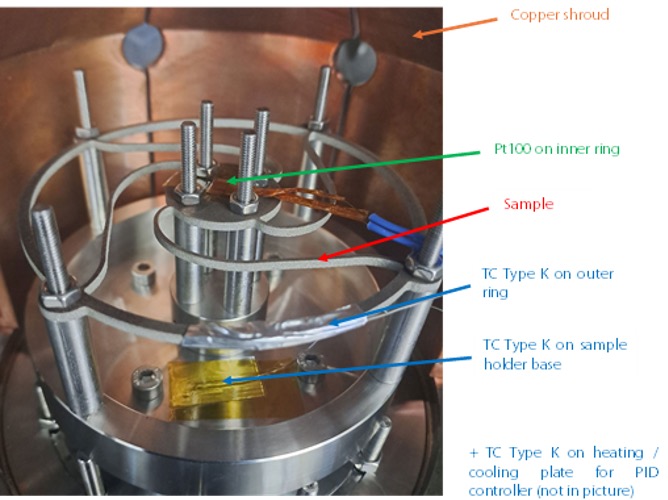
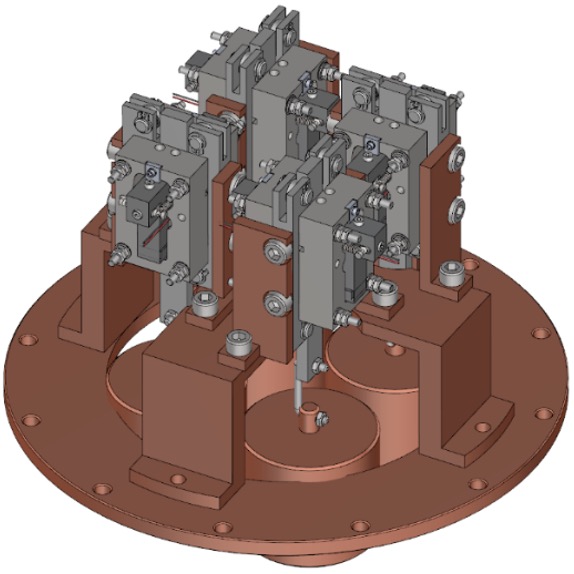
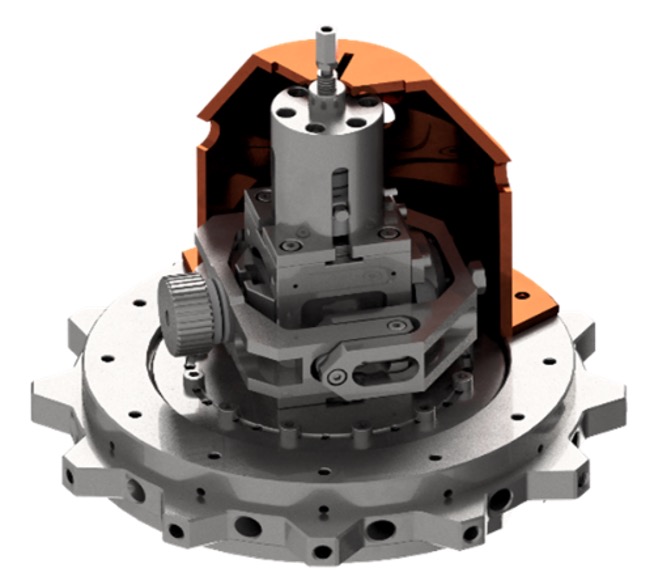
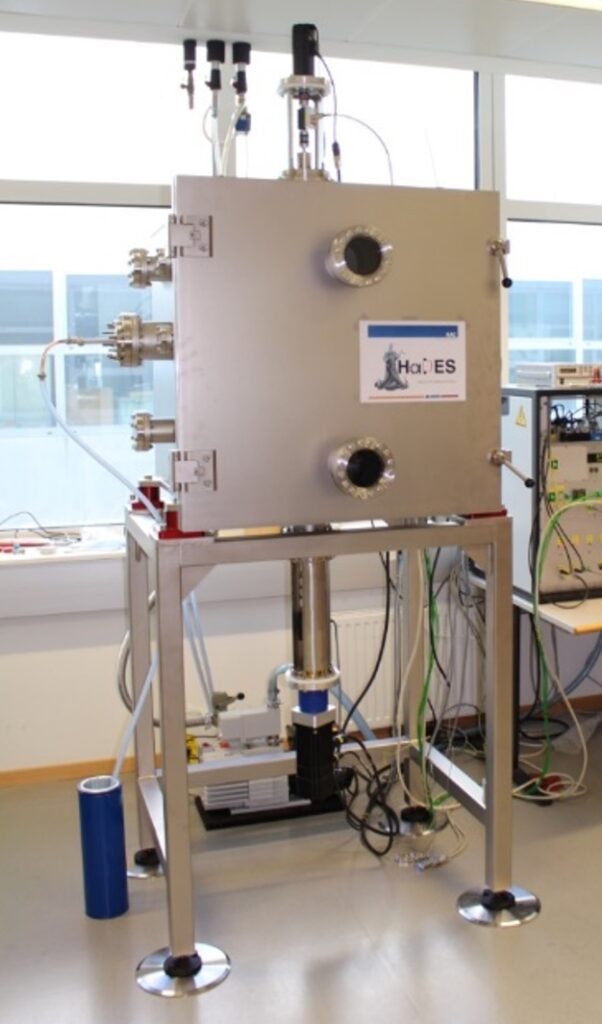
    The term “Compliant mechanisms” refers to bulk components that can replace tribological components like bearings or gears: in contrast to a bearing or a gear, they do not need lubrication. Using Shape Memory Alloys (SMA) motion can be generated without use of a classical motor. With in the ESA project 4Dprint, RHP (AT) manufactured a compliant mechanism (rotary actuator) by 3D-printing. The performance was tested under TVAC at AAC. Therefore, the gear test rig HADES was adapted to measure stiffness, output torque and output angle in TVAC.

    LiMoCoSS – “Life Monitoring of Composite Space Structures”
    2024

    LiMoCoSS-AAC

    Duration: Sept 2024 – March 2027

    Funding Source: FFG

    Collaborating Partners: AAC

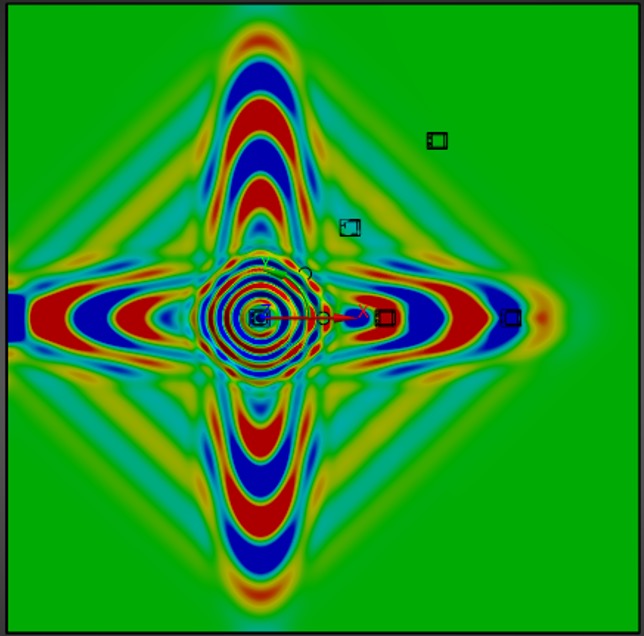
    Within the last years, AAC developed a novel hybrid multifunctional piezo / temperature sensor and monitoring concept for flow front, cure and structural health monitoring of composite parts manufactured by resin infusion, mainly for aeronautic applications.
    The main objective of “LiMoCoSS” is to use the idea of the above-mentioned concept and to develop a sensor and monitoring technology for space relevant composite structures and manufacturing techniques such as wet winding for through live monitoring of composite structures during manufacturing, storage, transportation and usage.

    EVA MODEL – “Evaporation modelling for long life mechanisms used in geostationary satellites”
    2024

    EVA MODEL

    Duration: Dec 2024 – Nov 2026

    Funding Source: ESA

    Collaborating Partners: CIM-mes, Nengineering

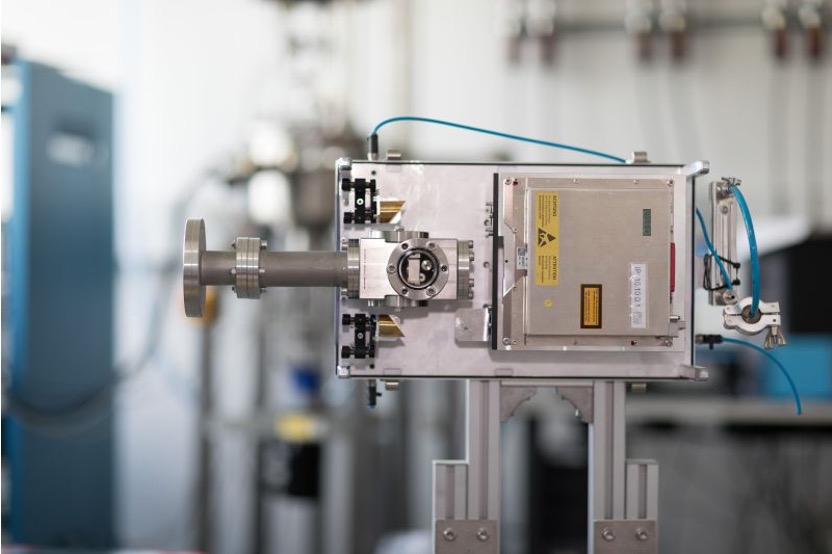
    This activity aims to develop an evaporation model for long life mechanisms including all most important mission factors influencing the total mass loss of lubricants. A web-based tool for calculating the outgassing behavior is created to give space engineers the opportunity to build their mechanisms even more precisely.

    ENGRT II

    2024

    Duration: Dec 2025 – Dec 2028

    Funding Source: European Defence Fund (EDF)

    Collaborating Partners: Airbus Helicopters, Leonardo

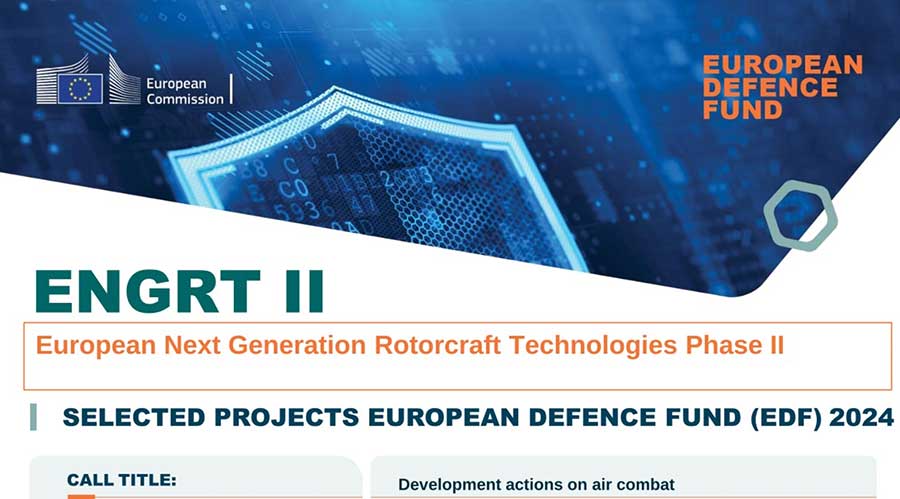
    Aerospace & Advanced Composites is pleased to be part of ENGRT II within a consortium made of 56 partners representing +10 nations all over the European Union.

    Airbus Helicopters and Leonardo welcome the selection of the European Next Generation Rotorcraft Technologies Phase II (ENGRT II) project by the European Commission in the frame of the European Defence Fund (EDF). The project, building on European Next Generation Rotorcraft EDF project started in 2022, was proposed by a European consortium composed of leading edge Research Centers, SMEs and Industries gathered by Airbus Helicopters and Leonardo to answer EDF call 2024. Following this selection phase, the European Commission will enter into the grant agreement preparation with the consortium.

    LMD4MM – “Laser-Metal-Deposition for Multimaterial Manufacturing”
    2024

    Duration: June 2024 – May 2026

    Funding Source: FFG

    Collaborating Partners: AAC, RHP-Technology

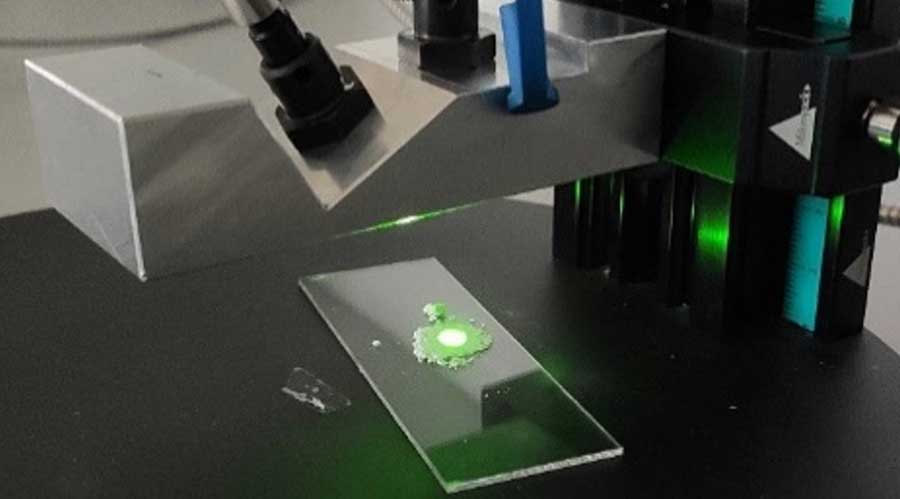
    LMD4MM project advances Laser Metal Deposition technology to enable high-precision, multi-material manufacturing for aerospace and industrial applications. By using up to six powder feeders, it enables the in-situ creation of advanced materials like high-entropy alloys, metal matrix composites, and functionally graded materials, opening new possibilities for smart, high-performance components.

    ProFilm – “European Protective Thin Films for Space Applications”

    2024

    Duration: July 2024 – August 2026

    Funding Source: ESA

    Collaborating Partners: AAC, DLR, HPS

    ESA has funded a €1 million project led by HPS, AAC, and DLR to develop next-generation multifunctional films for space applications. Aimed at improving satellite protection and performance, the project focuses on creating advanced materials with features like ATOX resistance, non-reflectiveness, and adaptability for use in thermal insulation, deorbiting systems, and stealth technologies.

    Piezomotors and F2M

    2023

    Piezomotors

    Duration: Feb 2016 - Nov 2025

    Funding Source: ESA, FFG

    Collaborating Partners: CEDRAT (F), RHP(AT)

    The usage of linear piezo motors offers attractive advantages (such as outstanding torque vs mass ratio, irreversibility and stable positioning when unpowered). Friction based actuators would not need any energy during holding times. However, the main disadvantage of this necessity of stable friction and low wear.Within an ESA-Project AAC was responsible to validate friction coefficient in a representative way for the stick-slip-motion of such piezo motors. Following the non-promising results, AAC could within an FFG-project “Friction-to-Move” develop a new coating that offers medium and stable friction in ambient air and high vacuum. 

    LABELO – “Laser Structured Anti-Icing Coatings for Aerospace Applications”
    2023

    Duration: October 2023 – September 2025

    Funding Source: FFG/BMK

    Collaborating Partners: AAC, AIIs, FH JOANNEUM, INOCON Technologie, TU Wien

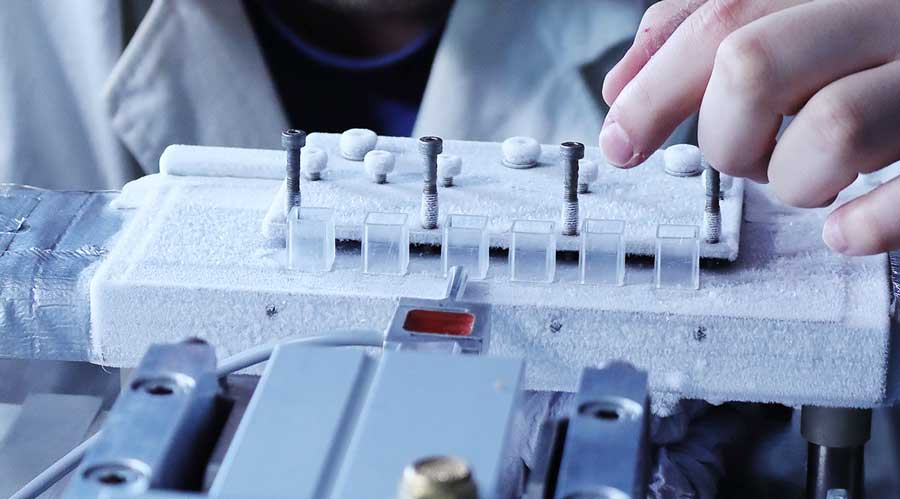
    Developing durable and highly effective passive anti-icing surfaces for aircraft by combining laser structuring, functional nano-coatings, and a robust plasma coating. Performance is evaluated through experimental icing tests and numerical simulations.

    LabMat – “Ball Bearings Labyrinths Modelling And Testing”
    2023

    LabMat

    Duration: Jul 2023 – Sept 2025

    Funding Source: ESA

    Collaborating Partners: CIM-mes (prime), Nengineering

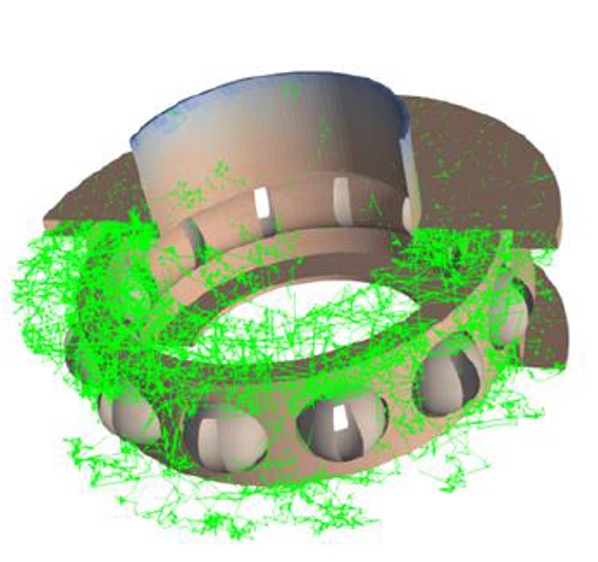
    This project aims to develop an improved, simplified methodology for predicting lubricant evaporation through labyrinth seals which can be used by space mechanism designers. This prediction is critical to check if a sufficient amount of lubricant is in the bearings at the end of life and, secondly, to estimate potential risks of molecular contamination of nearby sensitive surfaces.

    CronHard

    2023

    CronHard

    Duration: Feb 2016 - Nov 2022

    Funding Source: ESA

    Collaborating Partners: Cerobear (DE), HDSE (DE)

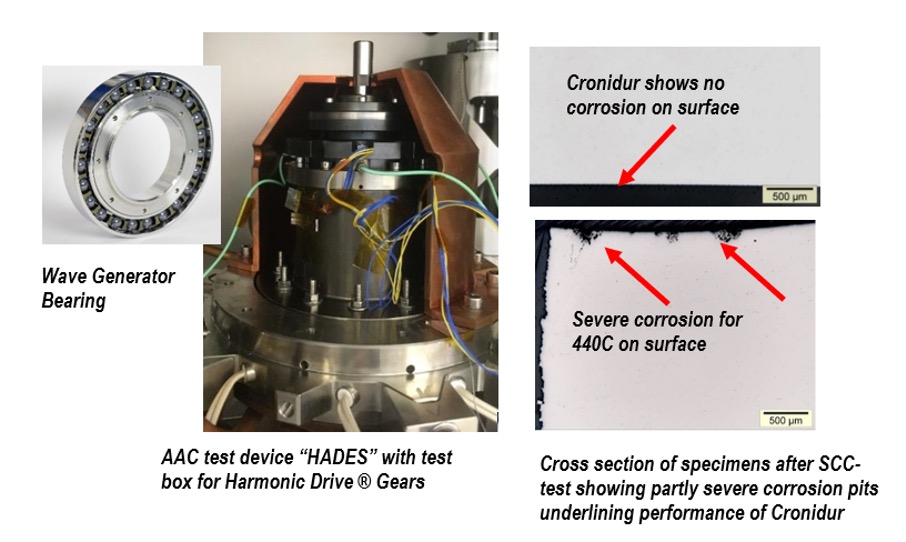
    For ball bearings, steels were developed with a high hardness to obtain good wear resistance and to survive high contact stresses, but not being resistant against stress corrosion cracking (SCC). However, the trend to higher efficiency and mass reduction leads to “integrated solutions”, like combining bearing with housing for which tensile stresses appear in the rings and the problem with SCC compatibility arises.  The project validated a heat treatment enabling Cronidur steel to withstand SCC test at a stress level of 50% of Rp02 without any signs of corrosion and stress-corrosion cracking phenomena. As Harmonic Drive ® Gear was using a Wave Generator Bearing machined from Cronidur and thermally treated via AAC. A life test in thermal vacuum was run for almost 6 months (from +90°C to -40°C) showing the bearing rings to be in good conditions.

    LuST – “Lubricated Slipring Testing for space”
    2022

    LuST

    Duration: Aug 2022 – Sept 2024

    Funding Source: FFG

    Collaborating Partners: AAC

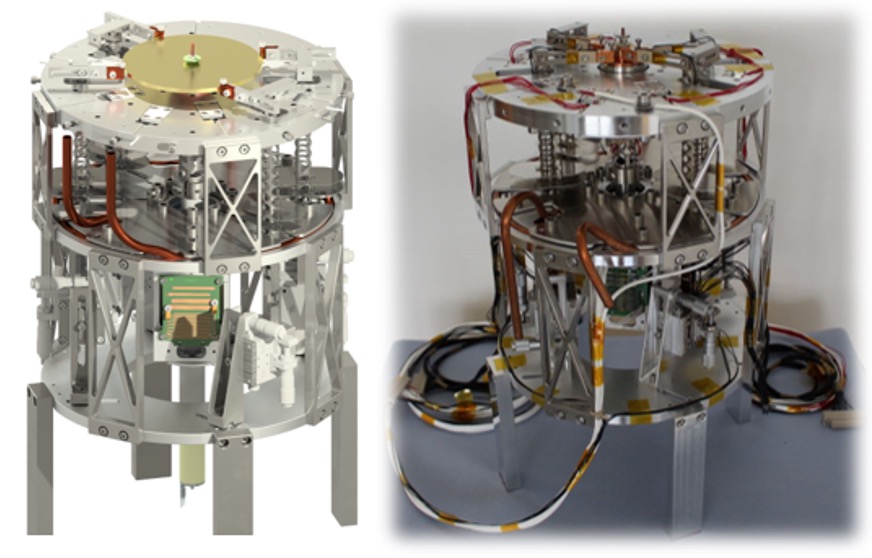
    Sliprings are a common building block of satellites and are used to transfer electrical signals and electric power onto a rotating axis. A lot of R&D in this field was ongoing in the last years and it was found, that actual tribometers are reaching their limits when it comes to testing of sliprings. Target of the project “LuST” is to extend the existing test method to low temperature to verify, if lubricated sliprings are feasible not only for room- and high tempertures but also in low temperature conditions as well.

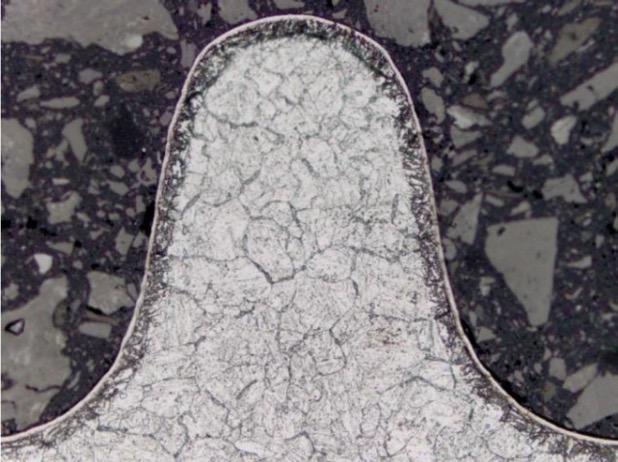
    Enhancement of Life for Solid lubrication of Harmonic Drive ® gears, benefitting from new plasma nitriding processes made in AT (ASAP project “harmADES”)
    2021

    Enhancement

    Duration: Aug 2022 – Sept 2024

    Funding Source: FFG, (DLR)

    Collaborating Partners: HDSE (DE)

    In 2019 an ASAP-project under bi-lateral funding of Austria (FFG) and Germany (DLR) could successfully be finalised. It aimed at enhancement of torque and lifetime for solid lubricated Harmonic Drive ® gears (HDs). Together with the manufacturer Harmonic Drive SE (DE) and an Austrian supplier for heat treatments (HMW), reasonable effort was put in the optimisation of nitriding process towards PH-steels used for gears in space. The main problem was that standard nitriding processes cause formation of so called “white etching layers”, which are on PH-steels very brittle. The new process aims at avoiding that layer and just improving the subsurface hardness to provide a better mechanical support of the tribologically stressed surface. Final life tests were done on newly nitrided Harmonic Drive ® gears, having been fully solid lubricated by use of tin coatings in the toothing. They life could be increased from less than 4000 revs to almost 15.000 revs.

    HarmADES and Mechanisms that operate at low temperatures (MREP)
    2021

    HarmADES

    Duration: Aug 2022 – Sept 2024

    Funding Source: ESA, FFG

    Collaborating Partners: HDSE (DE), Tecnomare (IT)

    An ASAP-project under bi-lateral funding of Austria (FFG) and Germany (DLR) aimed at enhancement of torque and lifetime for solid lubricated Harmonic Drive ® gears (HDs). Together with the manufacturer Harmonic Drive SE (DE) and an Austrian supplier for heat treatments a new nitriding process was developed for PH-steels used for gears in space. The new process aims at avoiding brittle WE-layer and just improving the subsurface hardness. In 2021 the ESA-MREP project “Mechanisms working at low temperatures” a Harmonic Drive ® gear was equipped with newly nitrided parts. Life tests over 63.000 output revolutions under permanent thermal cycling between -80°C and -5°C were successful at high efficiency.

    BMG – Bulk Metallic Glasses geostationary satellites”
    2021

    BMG

    Duration: Feb 2019 – Nov 2021

    Funding Source: ESA

    Collaborating Partners: FOTEC, RHP, OptAlm

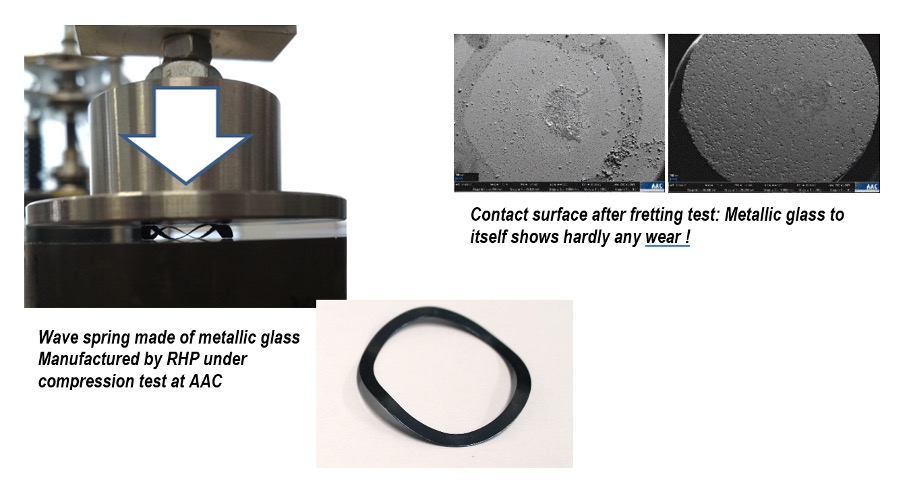
    Bulk metallic glasses (BMG) are still an exotic kind of material. In fact, they are rapidly cooled metallic alloys. The rapid cooling “freezes” the amorphous state of the liquid and hinders crystallisation. AAC acting as subcontract to RHP assisted in material characterisation and application tests on springs and hold-down and release mechanisms (HDRM). BMG in contact to itself showed surprisingly low adhesion in fretting tests done in launch conditions. Hence, bulk metallic glasses may become an interesting new option for HDRMs.

    JOICE – “Joint Austrian In-Flight Icing Research Venture 2020+”
    2020

    Duration: October 2020 – September 2023

    Funding Source: FFG/BMK

    Collaborating Partners: AAC, AeroTex, AIIs, AIT, ATT advanced thermal technologies, CEST, Eologix Sensor Technology, FACC Operations, FH JOANNEUM, JOANNEUM RESEARCH, KANSAI HELIOS Austria, LKR Leichtmetallkompetenzzentrum Ranshofen, RTA Rail Tec Arsenal Fahrzeugversuchsanlage, Seoul National University, TU Graz, Villinger

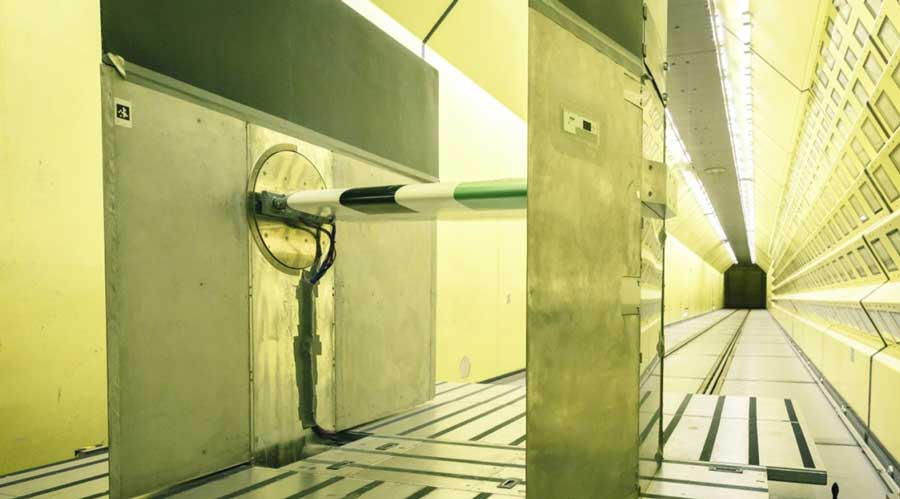
    Project JOICE is Austria’s flagship R&D initiative focused on advancing aircraft icing research. The project develops innovative ice protection systems, enhances simulation tools, and strengthens national expertise in in-flight icing phenomena.

    https://www.project-joice.com/

    IMPACT – “Aircraft advanced rear end and empennage optimisation enhanced by anti-ice coatings and devices”
    2020

    Duration: September 2020 – August 2023

    Funding Source: EU

    Collaborating Partners: AAC, AIT, CEST, Eurotech Di Mario Amoroso SAS, RTA Rail Tec Arsenal Fahrzeugversuchsanlage, SmartUp Engineering, Università degli Studi di Napoli Federico II, Università degli Studi di Udine, University of Southampton

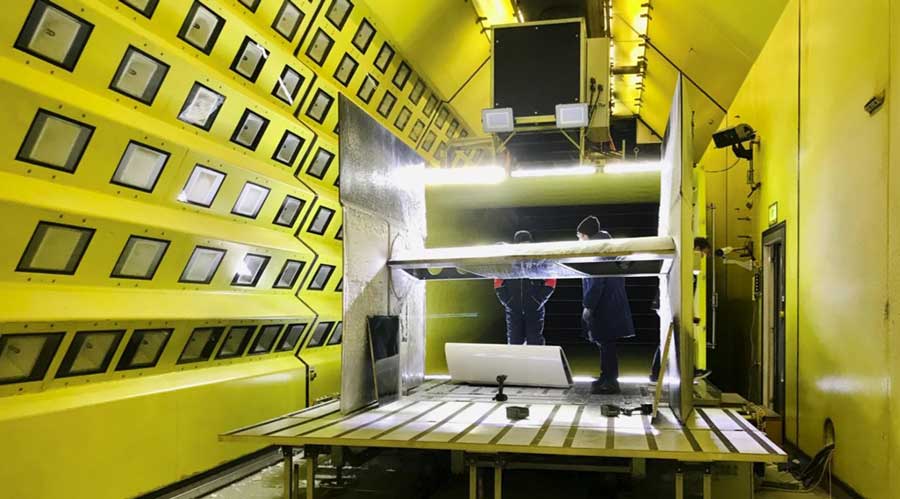
    The IMPACT project, part of the EU’s Clean Sky 2 program, focuses on optimizing aircraft rear fuselage and empennage designs by integrating passive anti-icing technologies. Led by the Austrian Institute of Technology, the consortium of ten partners from Austria, Italy, the UK, and Canada aims to enhance aerodynamic efficiency and safety through advanced 3D ice accretion simulations, innovative aerostructural optimization methods, and large-scale icing wind tunnel validations.

    https://www.impact-cleansky-project.eu/

    LiBio – “Lightweight Bionic Aircraft Interior – Entwicklung von Multimaterial-3D-Druck und multifunktionalen Beschichtungen”
    2020

    Duration: May 2020 – November 2023

    Funding Source: FFG

    Collaborating Partners: AAC, ANTEMO Anlagen & Teilefertigung, F. LIST, INOCON Technologie, JOANNEUM RESEARCH, KANSAI HELIOS Austria

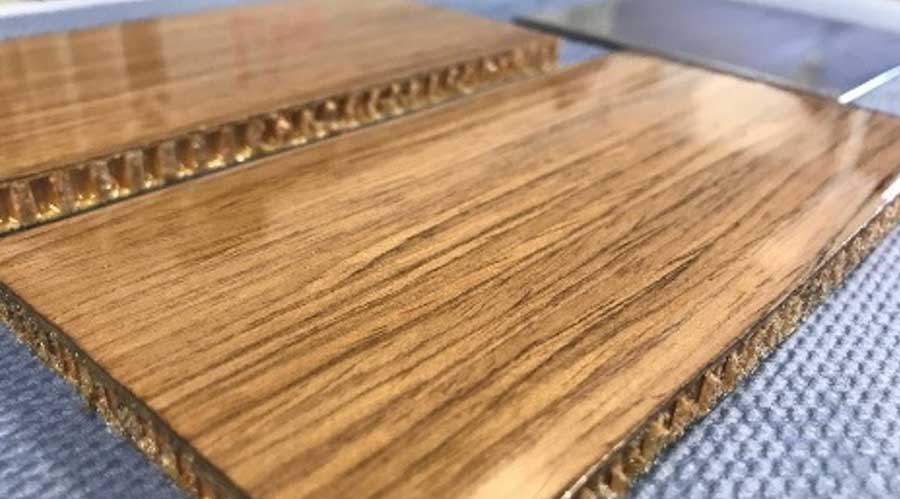
    LiBio is a transnational R&D initiative revolutionizing aircraft cabin design through sustainable, bionic-inspired components using advanced multi-material 3D printing. By combining innovative surface finishes and lightweight structures, the project enhances aesthetics, functionality, and passenger comfort while meeting strict aviation standards.

    https://projekte.ffg.at/projekt/3337099

    SLPMC2 – New EU-Solid lubricating material for Bearings by ENSINGER (TS8591)
    2020

    SLPMC2

    Duration: Feb 2016 – May 2020

    Funding Source: ESA

    Collaborating Partners: ENSINGER Sintimid Austria

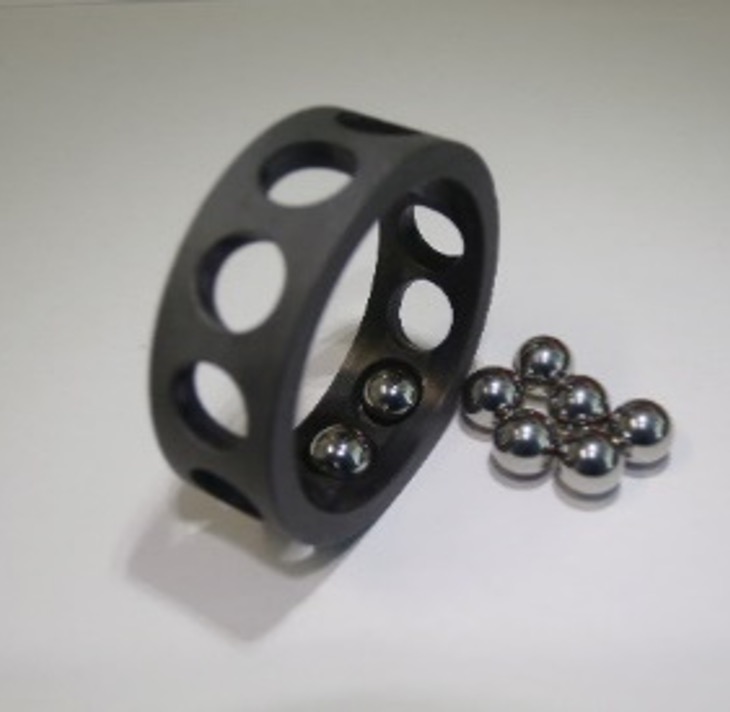
    To get non-dependent from non-EU-suppliers, a new material based on PTFE was developed by ENSINGER SINTIMID (AT) under assistance of AAC. It’s targeted use as cages in ball bearings offers the lubricant to be transferred by the balls from the cage onto the races. Bearings can be equipped only with a cage made of the new PTFE-based material, showed in long term ball bearing tests low torque.

    Magnetic Brake – “Actuator with High Resolution Magnetic Braking”
    2019

    Magnetic Brake

    Duration: Feb 2019 – Feb 2023

    Funding Source: ESA

    Collaborating Partners: IIES, LCM

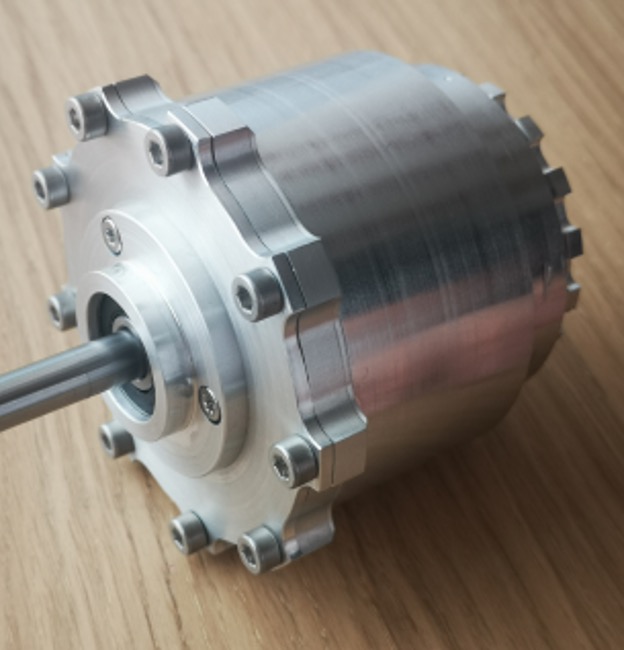
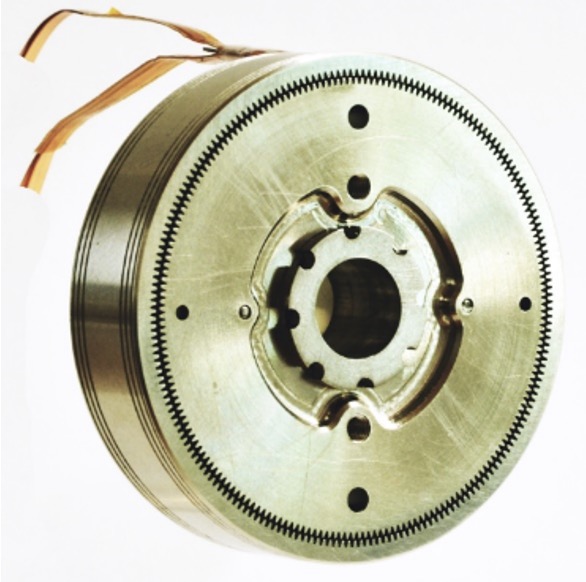
    Within the ESA-project “Magnetic Brake” an Austrian consortium designed, built and tested a braking system which can be attached to a motor and increase it’s holding torque. This device – the magnetic brake – is contactless, wear-free and helps to reduce the power consumption on satellites. AAC’s part was to test the magnetic brake under space conditions (high vacuum hot and cold) and verify it’s predicted performance. The test campaign was finished successful in 2023 and the device outperformed ESA’s specifications.

    LubRes – “Novel anti-ice surfaces based on lubricant reservoirs in polymer coatings”

    2018

    Duration: January 2018 – June 2021

    Funding Source: FFG

    Collaborating Partners: AAC, CEST, KANSAI HELIOS Austria, RTA Rail Tec Arsenal Fahrzeugversuchsanlage

    The LubRes project aims to develop innovative, ice-repellent coatings for aircraft that offer long-lasting protection against ice formation and erosion. By embedding lubricating liquids into functionalized paint matrices the coatings can maintain their anti-icing performance over time, even under wear. This technology enhances flight safety, reduces maintenance needs, and contributes to lower emissions in the aerospace industry.

    https://projekte.ffg.at/projekt/2758292

    Projekt Evolution#4 – “ Entwicklung einer vollautomatisierbaren Luftfahrt-Fertigungstechnologie und Implementierung von Industrie 4.0
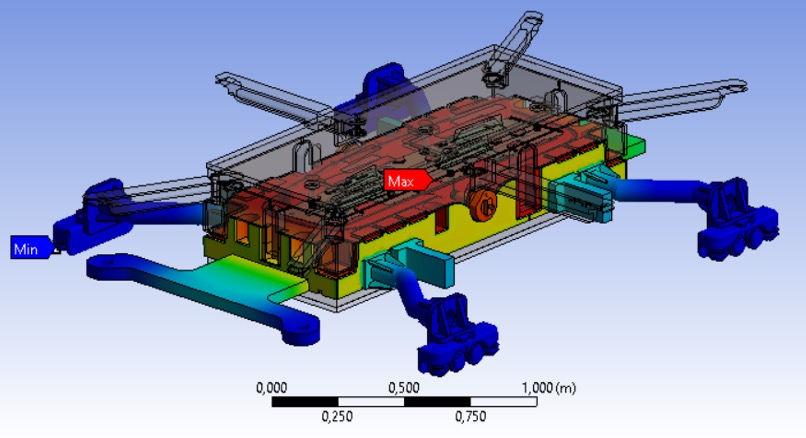
    2018

    Evolution-4

    Duration: January 2018 – December 2020

    Funding Source: FFG

    Collaborating Partners: AAC , ALPEX, Brimatech, FILL, MUL

    Projekt Addictive Tooling – “Additive Fertigung Innovativer Toolings zur Herstellung Intelligenter Faserverbundbauteile”

    2016

    Addictive-Tooling

    Duration: Sept 2016 – August 2018

    Funding Source: FFG

    Collaborating Partners: AAC , ALPEX, Brimatech, FOTEC, RHP

    In Addictive Tooling the consortium will develop a manufacturing process for an undercut CFRP hollow structure for the EC135 rotor system and its associated tooling system in additive manufacturing. In cooperation with Airbus Group Innovation and Airbus Helicopters a new designed vacuum assisted infusion technology will be the baseline for further development of intelligent, sensor-optimized toolings and robust processes. 

    The project KOKOS funded by the German Government via the LuFo V-2 call represents the demands and quality aspects of aircraft parts. By working together both parties expect synergies and benefits. While both projects are completely independing, KOKOS can benefit of a new tooling technology while Addicitve Tooling has the direct requirements by an end user as well as the possibility for evaluation close to industrial environment.

    IceDrip – “Aircraft anti-icing and de-icing through assemblies of conducting varnish and functional coatings”

    2014

    Duration: April 2014 – September 2016

    Funding Source: FFG

    Collaborating Partners: AAC, FH JOANNEUM, JOANNEUM RESEARCH, KANSAI HELIOS Austria, RTA Rail Tec Arsenal Fahrzeugversuchsanlage, Villinger

    The IceDrip project explores the integration of advanced electro-thermal ice protection systems with (super)hydrophobic surface coatings to enhance energy efficiency and reliability in aviation. By combining continuous anti-icing at the leading edge with targeted de-icing further downstream, and optimizing ice-shedding through water-repellent surfaces, the project aims to reduce energy consumption while ensuring effective and consistent ice removal.

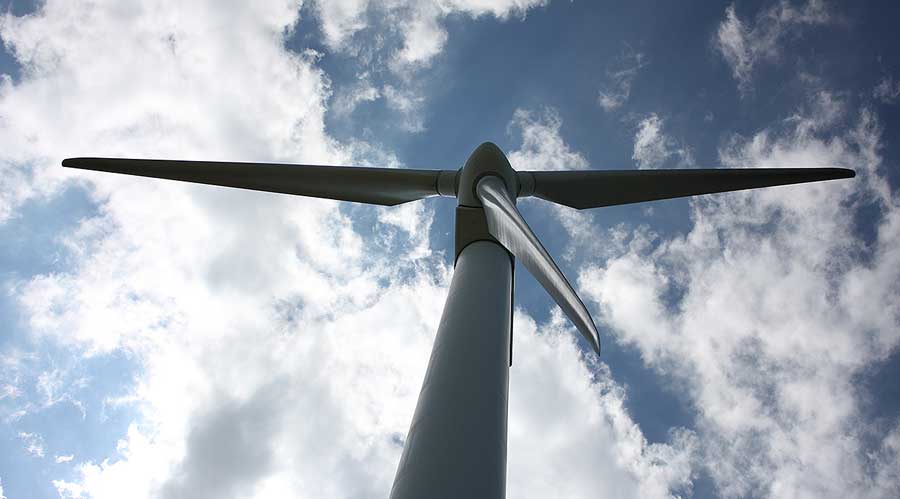
    Rotorblattenteisung – “Produktivitätssteigerung durch Management von Eisansatz an Rotorblättern”
    2011

    Duration: October 2011 – March 2014

    Funding Source: FFG

    Collaborating Partners: AAC, AIT, LKR Leichtmetallkompetenzzentrum Ranshofen, STERNWIND Errichtungs- und Betriebs, Villinger, WEB Windenergie AG

    The Rotor Blade De-Icing project aims to reduce wind energy production losses caused by icing, particularly during winter months when other renewable sources like hydropower and solar generate less energy. By minimizing these losses, the project contributes to lowering reliance on fossil fuels and reducing CO₂ emissions. Research focuses on three innovative technological approaches: utilizing sublimation to prevent ice buildup, developing specialized blade surface coatings, and implementing active electrical de-icing systems.

    IceGrid – “Untersuchung von Eisbildung auf Rückhaltegittern im Klimatisierungssystem von Luftfahrzeugen”

    2011

    Funding Source: FFG

    Collaborating Partners: AAC, Airbus Deutschland, Cavotec, FH JOANNEUM, Icon, TU Graz, Villinger

    The IceGrid project focused on preventing ice formation on protection grids in aircraft air-conditioning systems and ground-based climate modules. By combining heating paints and ice-repellent coatings, and validating performance through icing wind tunnel tests and simulations, the project successfully demonstrated that heated grids could prevent ice buildup while minimizing heat impact on airflow—enhancing reliability and efficiency in aerospace climate systems.

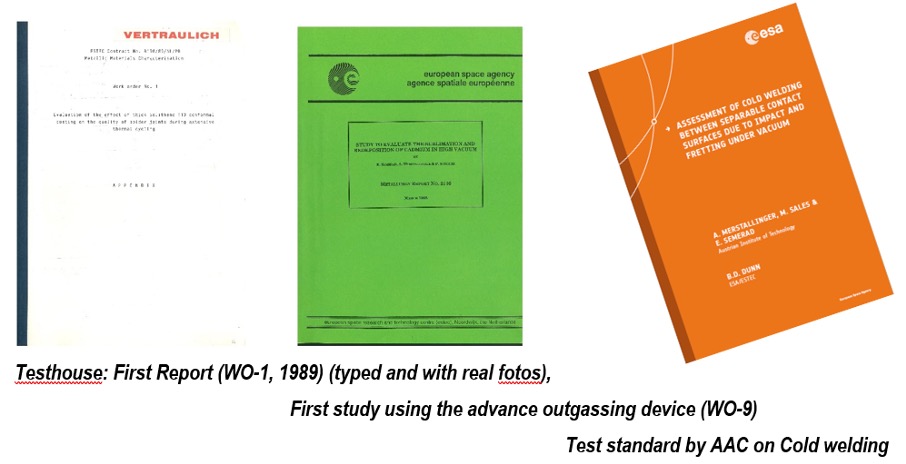
    “Testhouse” – Metallic material characterisation
    1989

    Testhouse

    Duration: 1989 - 2025

    Funding Source: ESA

    35 Years anniversary of the “Materials testhouse” @ AAC 

    AAC is proud to announce, that its frame contract to ESTEC on Metallic Material Characterisation (“ESA testhouse”) has achieved in 2024 an anniversary of 35 years. The first contract of our space group to ESA/ESTEC could be established in 1989. Since then, AAC was 4 times successful to er-establish this contract in open competition. The aim is to validate new materials and processes for use in space. The contract shall provide data necessary for space engineers to apply new materials or processes in their missions. As qualification for space is cost and time consuming, this is usually not possible within mission. 

    Recent studies continued validating the SCC-resistance of new materials made by AM (Additive Manufacturing, 3D-Printing). One of the key competences within this contract is “Cold Welding” having be initiated by ESA in 1990ies. Finally ESA agreed with AAC on a test method to benchmark contact pairs for their risk to cold welding and published it as “STM-279”. Meanwhile, several pairs were screened and the data generated is available via an online data base. Due to upcoming new needs, the standard was recently updated by AAC and is in review at ESA.